

.jpg)
10 years ago, the Central Highlands and southeastern Vietnam were still malaria “hotspots.” Dense forests and a hot, humid climate created ideal conditions for mosquito breeding and parasite transmission. At the same time, many cases went undetected, and treatment adherence remained low, increasing the risk of complications, drug resistance, and pushing people deeper into cycles of poor health and poverty.
Our first field visits to Gia Lai and Binh Phuoc revealed that malaria disproportionately affected ethnic minority communities in remote areas, where livelihoods are closely tied to forests and farm fields. Many people spent extended periods in the forest, sleeping in temporary shelters with little protection from mosquitoes. Language barriers and geographical isolation further limited access to timely diagnosis and treatment.
.jpg)
Photo: SCDI team on our first field trip to malaria hotspots in Gia Lai province.
.jpg)
Photo: People in malaria "hotspots” often spend weeks deep in the forest farming, harvesting, or collecting cashews, cassava, corn, and bamboo shoots, facing a high risk of malaria exposure.
.jpg)
Photo: Inside a temporary shelter people put up for their long trips into the forest, where they sleep on a hammock with little to no protection from mosquitoes.
These realities showed that sustainable malaria control depends on communities having the knowledge, tools, and access to services to protect themselves.
From 2018 to 2023, under the project “Enhancing Community Participation in Malaria Elimination,” SCDI worked with local leaders and trusted community members to establish CMATs (Community Malaria Action Teams).
During peak malaria season, CMAT members travel through difficult terrain to reach remote communities. They provide counseling in local languages, support symptom recognition, and distribute preventive tools such as insecticide-treated nets and repellents. For suspected cases, they connect individuals to testing, accompany them through treatment, and help mobilize support for basic needs when necessary.
.jpg)
Photo: CMAT members go into the forests and swidden fields to reach and support local people
.jpg)
Photo: Outreach and support efforts become increasingly challenging during rainy seasons
Over time, CMAT became a trusted presence. Community members began proactively reaching out, while local health facilities strengthened collaboration to better support patients facing treatment challenges.
Within one year, CMAT helped identify and connect one in four malaria cases to treatment, while increasing treatment adherence from below 50% to 95%. By the end of 2023, according to our reported data, no malaria cases were recorded in implementing sites.
.jpg)
Photo: CMAT members visit households one by one to check in and share information on malaria prevention, while leaving contact details so community members can proactively reach out if symptoms appear and timely support is needed.
.jpg)
Photo: CMAT members on their way to accompany local people to a health facility for malaria testing.
What started 10 years ago has grown into a strong community system. Former patients have joined CMAT, while community members have become more confident in communication and engagement. CMATs are now actively raising community needs and contributing to improved health and social services.
.jpg)
Photo: Overtime, CMAT members have become more confident and actively contribute their voices in meetings and community consultations.
.jpg)
Photo: CMATs has also become more proactive in voicing community needs and shaping more responsive, holistic health interventions.
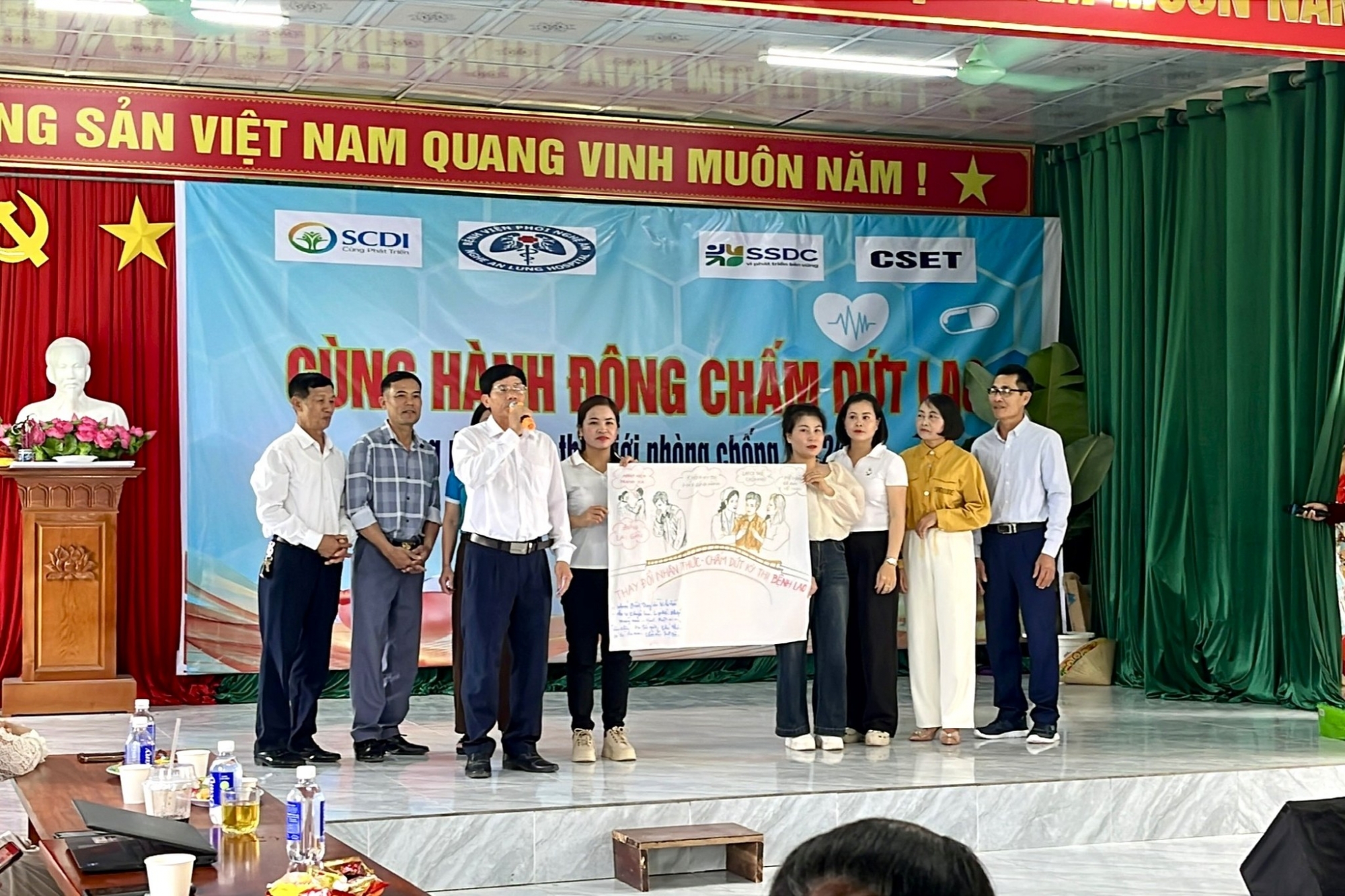
This foundation continues to inform SCDI’s work, from supporting tuberculosis treatment adherence to exploring community-based approaches for dengue prevention and poverty reduction in the Central Highlands.

.JPG)
.png)